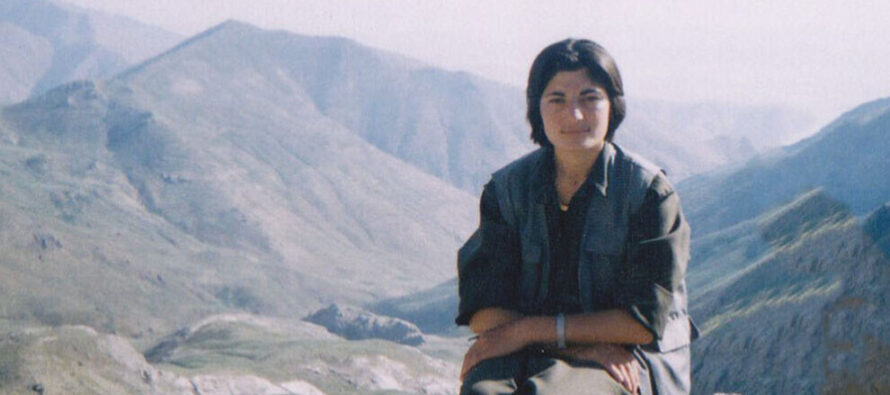

The human rights organization Amnesty International has launched an urgent campaign for Zeynab Jalalian and is calling for letters to be written to the Head of the Iranian judiciary, Ebrahim Raisi. Zeynab Jalalian, a political prisoner from Maku in eastern Kurdistan who has been imprisoned in IranIran
Irak
SYsince 2008, is seriously ill and being tortured, and is being denied medical treatment. The Iranian Ministry of Intelligence is conditioning access to adequate health care, transfer to a prison closer to her family home in West
Azerbaijan province and an end of reprisals against Zeynab Jalalian and her family on her “confessing” to wrongdoing and expressing remorse for her past political activities on camera and agreeing to work with the ministry of intelligence.
Only woman in Iran to receive life sentence
Born in Maku in 1982, Zeynab Jalalian was arrested in Kermanshah in the summer of 2008 and sentenced to death in January 2009 before a revolutionary court there for “enmity against God.” The sentence was related to Jalalian’s membership in the “Party for a Free Life in Kurdistan” (Partiya Jiyana Azad a Kurdistanê – PJAK). She had previously spent eight months in pretrial detention at a Ministry of Intelligence facility. She did not have access to legal counsel during her trial, which lasted only a few minutes. The death sentence against Zeynab Jalalian was commuted to life imprisonment in November 2011. She is currently the only female prisoner in Iran to be given this sentence.
Covid-19 contracted during the transfer odyssey
Over the past year, Zeynab Jalalian was transferred by Ministry of Intelligence agents to various prisons across the country four times within a few months. During this odyssey, she contracted Covid-19 and asthma and continues to suffer from shortness of breath. It is therefore likely that she will suffer permanent lung damage. In addition, she suffered injuries from shackles on her wrists and ankles during the transports and was physically abused by Iranian security forces. Because her injuries went untreated, she is now suffering from the long-term injuries. She also suffers from other serious health problems as a result of the prison conditions and mistreatment, including heart, intestinal, and kidney diseases, paralysis, and dental and jaw infections. As a result of repeated blows to the head, her vision is severely impaired. To date, Jalalian has received medical care outside of prison only once, briefly, after she tested positive for COVID-19 in June. At the time, she had temporarily gone on a hunger strike in an attempt to be returned to the detention center in Khoy- unsuccessfully.
Family subjected to repression
Since November, Jalalian has been held in a prison in the central Iranian city of Yazd, some 1,400 kilometers from her family’s home. That same month, her father Ali Jalalian was temporarily detained and interrogated by Iranian intelligence in Maku for speaking to human rights organizations and foreign media about his daughter’s situation. The man released on bail a day later.
UN: Jalalian convicted for commitment to rights of Kurdish women
In April 2016, the UN Working Group on Arbitrary Detention called on Iran to release Zeynab Jalalian immediately as she had been detained only for peacefully exercising her rights to freedoms of expression and association through “her activities as a social and political activist for the rights of Kurdish women” and “her involvement in political activism… with the non-militant wing of the PJAK”. The Working Group stated that she had been denied the right to a fair trial and that her treatment violated the prohibition of torture and other cruel, inhuman or degrading treatment or punishment. The refusal of authorities to provide prisoners with medical care constitutes torture if such deprivation is intentional and inflicts “severe pain or suffering” for such purposes as punishment, coercion or intimidation, obtaining a “confession”, or for any reason based on discrimination of any kind.