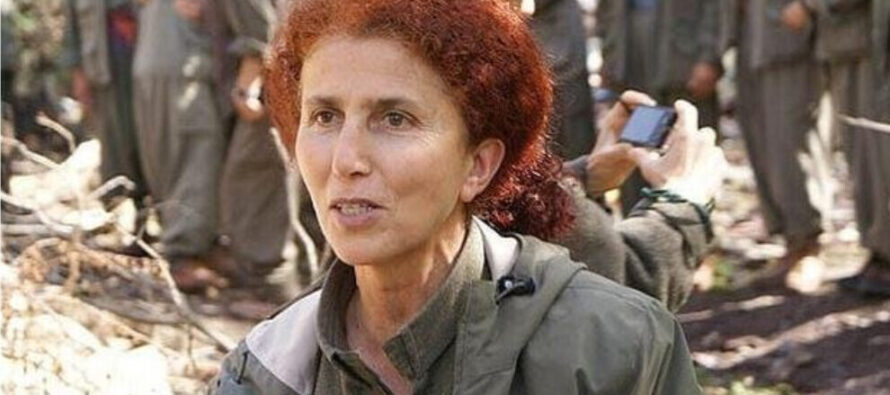
The ‘Ya Star’ of the Kurds, Sakine Cansiz

The ‘Ya Star’ of the Kurds, Sakine Cansiz

Loading

There is a lot to be said about Sakine Cansiz. However, what is more important is to understand Sakine Cansiz’s fight, to expand it, to struggle the way she did, to reject the male-dominated world, to resist, to be comrade to Leader Apo, to become free.


The fact that the 21st century is a century of women’s freedom means freedom for the whole society. Women’s freedom is the freedom of society. The fact that the century is the century of women’s freedom is a result of the women’s liberation ideology developed under the leadership of Leader Apo (Abdullah Öcalan). The level of fascism, the resistance of women against the brutality imposed on the whole society, peoples, and differences, and their leading role in social resistance, the persistence in this resistance are also an indication that this resistance will win. Women show that they will not stop until the dictator is prosecuted and convicted, fascism is overthrown and the isolation is broken, until they do not gain freedom in total.

The awakening of the women who resisted in the 20th century under the leadership of Kurdish women, the awareness they have created themselves, the gradual spread and socialization of the pioneering female character give great hope to all women and humanity all around the world for the 21st century. This hope deepens and strengthens the belief that free life will come true and it becomes the fearful dream of any dominant mindset. It is understood how much capitalist modernity and the fascist, monist, dictatorial practices – its regional collaborators of all kinds- are afraid of women’s values and creations and the dynamism of society intertwined with women’s values. All kinds of backwardness, domination, dictatorship, anti-democracy, all versions of fascism are scared of women the most.

Fascism attacks what it fears most. In this sense, the fascist Turkish state, which is the regional representative of fascism, is afraid of the resisting women, the Kurds, revolutionaries and those who struggle for democracy. Not all attacks are based on political lines. Some attacks are carried out with political discourses, some attacks are carried out with nationalist motivations, some attacks are carried out in the economic field. When the fascist powers realize that they will lose, they attack women the most and use men in these attacks. Fascism turns every man it enslaves into its own soldier and makes them attack women. Every man motivated by fascism attacks women by adopting the worst, the wildest, the most unsocial sides.

When we evaluate women’s increasing resistance, we need to mention the great historical figures who shaped this resistance. Sakine Cansiz is a turning point in the existence of Kurdish women, in breaking the chain of denial and destruction, in the existence of women, in their awareness gained through resistance and emancipation.

There are turning points in resistance and liberation, too. Sakine Cansiz is the strongest response to the efforts aimed at an elimination of the Kurdish women’s identity and history. The resistance she displayed in the prison, the struggle she continued to carry out, her stance that never avoided resistance and struggle in any period of her life, her insistence in freedom, the social values she created in herself and her insistence to spread these values to the whole society and all her friends and the most beautiful practical embodiment of these have elevated Sakine Cansız to a goddess level. Sakine Cansiz is the emergence of the mother woman who touched the soil and shaped the faces of people in all continents; the goddess who has always been longed for, expected and the belief in whose existence has not disappeared for a single moment. She is the reincarnation of Ishtar, Inanna or Cybele in this century.

Every society has a culture created in its history. Culture contains beliefs, traditions, aspirations, and goals within itself. When the Kurds got angry, when they were confused, when they needed a superior creator, they uttered the phrase “Ya Star” in every period of history. This discourse, this calling, is one of the rare values that the Kurds have preserved. Our language, our culture, our land, our people may have been slaughtered, shot, destroyed and subjected to atrocities that a human being barely endures. However, nobody could take away our Star. Although this Star is not an incarnation itself, it is a mentality structuring, a free life, a woman-oriented society consciousness. And this mentality has been embodied by Sakine Cansiz. Undoubtedly, there have been many women who are very close to this embodiment in the Kurdistan freedom movement. Zilan, Beritan, Nucan, Delal are also examples of Star’s embodiment in different dimensions. Sakine Cansız, the sum of our entire history of resistance, is the advent of the Star to the present day as an answer to the unabated call of the Kurds from the depths of history. It is the most magnificent realization of ‘the rise from the ashes’.

There is a lot to be said about Sakine Cansiz. However, what is more important is to understand Sakine Cansiz’s fight, to expand it, to struggle the way she did, to never accept the male-dominated world, to resist, to be comrade to Leader Apo and to become free.

Source: ANF https://anfenglish.com/features/the-ya-star-of-the-kurds-sakine-cansiz-49178


Tags assigned to this article:
KurdistanRojavaSakine CansizSlider

Related Articles

GABI MUESCA: nord e sud Euskal Herria, una lotta comune

Loading

Intervista di Fermin Munarriz

Gara Fu militante clandestino del nord (militò in Iparreterrak (IK), organizzazione armata del Paese basco nord,  nata nel 1972). Venne arrestato ed incarcerato, scappò e venne nuovamente arrestato. Passò 17 anni nelle carceri francesi dove ancora ci sono 150 donne e uomini baschi. Per tre anni rimase in totale isolamento. Si dibatteva come un leone in gabbia ed arrivò a fare flessioni alle tre del mattino per combattere il freddo nella cella. Sentì odio però non si lasciò vincere. Ne piegare. Uscì e continuò a lavorare per la dignità di tutte le persone incarcerate. Oggi lavora in Emaus. E per il suo paese. Mantiene la sua coscienza “abertzale” intatta, Trasmette energia e determinazione. Sa che vincerà.

Il suo libro autobiografico si titola “la nuque raide” (La nuca eretta) perché un direttore di un carcere disse che lei non ha mai piegato la testa. Che cosa fa un prigioniero per non piegarsi?

E’difficile dirlo… Il carcere è disegnato per spezzare il prigioniero, però con alcuni non riescono. Nella mia casa ho appreso fin da piccolo che cos’è la dignità e, entrato in carcere, come militante sapevo perché ero là e che l’obiettivo della prigione era romperti. Per questo fui subito cosciente che anche là dovevo continuare ad essere io padrone della mia vita e non i carcerieri. Questa è la ragione per la quale ho resistito 17 anni senza piegarmi.

Come nacque la sua coscienza di sinistra e “abertzale”?

Da bambino appresi l’euskara a casa, però lo persi poco a poco nella scuola francese. A 15 anni i miei genitori mi dissero che dovevo recuperarlo e partecipai a dei corsi. Scoprì che l’euskara era qualcosa di incantevole. Ed in quel momento in Iparralde era abbastanza trascurato e molta gente lo disprezzava. La presa d’atto di quella situazione fu, forse, l’origine della mia coscienza nazionale.

D’altro canto, ha 17 anni entrai a lavorare in una fabbrica. Lì vidi che non ero rispettato come lavoratore e rapidamente nacque in me la coscienza di classe. Per questo, fin da giovane ho avuto una coscienza “abertzale” e di sinistra.

Perché decise di aderire e militare in Iparreterrak?

Con quanto ho spiegato prima il cammino era facile. IK esisteva e si presentava come una organizzazione che lottava per la liberazione nazionale e sociale. Per tanto, per me, entrarvi a far parte era un percorso naturale. Analizzavo le azioni di IK e pensavo che i suoi militanti avevano ragione. A Parigi non ascoltano ciò che i baschi di Iparrralde diciamo in modo legale per le strade, nelle manifestazioni…Non ascoltano niente: per tanto, è necessario rafforzare la nostra voce mediante piccole azioni affinché a Parigi ci ascoltino. Però una cosa è pensarlo ed un’altra è chiedersi “cosa faccio io”. E cos’ì entrai in IK, come giovane abertzale cosciente che desiderava contribuire con il proprio sforzo alla lotta.

Suppongo che questa è una decisione difficile: la lotta armata può significare il carcere, la morte….Lei ha conosciuto i lati più amari: diversi suoi compagni sono morti – Diddier Lafitte, incluso, al suo fianco (Diddier Lafitte venne ucciso l’1 marzo 1984 a Bayona da un poliziotto francese in una operazione nella quale venne arrestato Gabi Muesca )– e ha anche trascorso 17 anni in carcere..

Passa poco tempo è si è coscienti della gravità di una decisione come questa. Questo lo sappiamo e come “abertzales” siamo coscienti che il nostro obiettivo è vincere. Un giorno vinceremo però sappiamo che la lotta è lunga e che prima di allora si può incontrare la morte o il carcere. Tenendo in considerazione che diversi miei compagni sono morti e sono stati feriti gravemente, io poteri considerarmi fortunato di vere conosciuto solo la prigione: e dico fortuna perché, come persona e militante, ho appreso molte cose in carcere.

IK dimostrò che il conflitto basco non era una cosa solo di Hego Euskal Herria (nello stato spagnolo)?

Dimostrammo che una parte del popolo basco esiste nel nord, che Euskal Herria non sono solo le comunità del sud, ma anche del nord, che non esiste Euskal Herria senza Iparralde.

Perdura in Ipar Euskal Herria il patrimonio politico di IK?

E’difficile dire che grazie a noi è avvenuta la tal cosa..Ciò che esiste oggi è il lavoro di tutti. Non mi piace dare più importanza ai militanti di IK che, per esempio, ai professori di SEASKA (movimento per l’alfabetizzazione in euskara in Iparralde)..Tutti gli abertzale hanno la stessa importanza; e sappiamo che unendo tutte queste forze possiamo vincere.

Come euskaldunes (basco, colui che parla euskara) e come abertzales abbiamo conseguito insegnare al mondo che siamo baschi e che vogliamo essere solo baschi. Prima di IK molta gente diceva che quelli di Iparralde erano baschi però francesi. Non possiamo lasciare il nostro futuro in mano dei politici di Parigi o Madrid perché sappiamo che vogliono che il nostro popolo scompaia.

Come vede le relazioni tra gli abertzales del nord e del sud?

Stanno sempre più migliorando perché in questi ultimi venti anni si sono creati legami non solo nell’ambito politico, ma anche in quello culturale, in quello commerciale…che fanno si che ci conosciamo meglio. Per molto tempo, per la gente di qui, quelli dell’altro lato erano spagnoli, però poco a poco abbiamo dimostrato che siamo uguali: baschi. Per secoli siamo stati separati, però c’è qualcosa che ci unisce al di là di tutto: la nostra lingua e la nostra cultura. E’ caduto un tabù perché ci siamo conosciuti mutuamente. E penso che la nostra lotta deve rafforzare questi vincoli a tutti i livelli: tra i bambini, tra gli sportivi, tra i lavoratori….

Si dice che il razzismo è la paura a ciò che non si conosce. E vediamo, ad una altro livello, che ci è passato lo stesso: tra la gente di Iparralde ed Hegolade è esistita una “muga” (frontiera, confine) che ci ha impedito conoscerci per secoli. Credo che questa muga stia cadendo anche grazie al lavoro degli abertzales. Sono contento nel vedere che giovani di qua vanno nell’altro lato a studiare nell’Università o a lavorare…Così si costruisce Euskal Herria del futuro.

VITTORIA STORICA PER KURDI E SINISTRA

Loading

Il Blocco Lavoro, Democrazia e Libertà ha eletto al parlamento turco 36 deputati. Una vittoria storica per il popolo kurdo e

IL PKK ANNUNCIA TREGUA UNILATERALE

Loading

Il PKK (Partito dei Lavoratori del Kurdistan) ha annunciato oggi, 13 agosto, un nuovo cessate il fuoco unilaterale. La tregua

No comments

Write a comment
No Comments Yet! You can be first to comment this post!

Write a Comment