CENTINAIA DI VITTIME IN CILE
![]()
Continua a salire il numero di vittime del terremoto che ieri ha colpito il Cile. Sono oltre 200 i morti fin ad ora accertati. Il ministro degli Interni Edmundo Perez Yoma afferma che “siamo di fronte ad un cataclisma di proporzioni storiche”. Il terremoto è stato di 8,8 gradi della scala Richter e secondo gli esperti è stato 50 volte più forte di quello che poche settimane fa ha devastato Haiti e il secondo più potente degli ultimi 20 anni, dopo quello di 9,1 gradi Richter registrato nel dicembre 2004 sulle coste dell’Indonesia e che provocò lo tsunami che uccise 220.000 persone. Sotto i numerosi palazzi crollati ci sono centinaia di persone. Argentina, Perù, Colombia, Bolivia e Venezuela hanno annunciato l’invio di aiuti e soccorsi. Il Cile si trova in una zona altamente sismica. Nel il 22 maggio del 1960 a Valdividia, a sud di Santiago, un terremoto di 9,5 gradi della scala Richter provocò la morte di 3 mila persone. Fu il più potente terremoto mai registrato nel mondo.
Related Articles

Wall Street’s Role in Narco-Trafficking – Mike Whitney
![]()
CounterPunch Imagine what your reaction would be if the Mexican government agreed to pay Barack Obama
EGUNKARIA: PRIMA TI CHIUDO POI TI ASSOLVO
![]()
Gara. Sette anni dopo la chiusura del primo quotidiano in euskara Euskaldunon Egunkaria”. l’Audiencia Nacional, dopo aver ammesso l’apertura del
Be your own media !
![]()
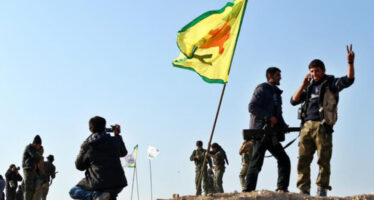
The “minds” behind The Rojava Report website are a group of students from different backgrounds. ANF interviewed them on why they felt more information on Rojava and more in general on the Kurdish issue is needed and how they tried to answer to this need by creating their own site.
How did the idea of a blog on Rojava come about ?
All of us who were involved in setting up the Rojava Report understood that there was a huge lack of information regarding what was happening in the region. When the media in the US spoke about the Kurds in Syria – and this itself was rare – it was always along the lines of ethnic or sectarian violence, or to give another example of the “intractability” of the conflict. It was always in terms of an “Arab-Kurdish” conflict, as a corollary or side-show to the “Alawite/Christian-Sunni” conflict that has been the dominant narrative in the mainstream media. In general we felt that those advancing the revolution in Rojava needed a platform from which their voices could be heard, and on which they could stake out their own vision for the future of their country and the Middle East more generally, without the reductionist narratives there are so common among out the major news outlets here. It was meant to be a more unfiltered, more direct source of news about what was happening in Rojava.
How is the Kurdish issue in general perceived in the States ?
Of course that depends on who you talk to. However even among people who consider themselves informed about events in the Middle East, and are sympathetic to a degree to Kurdish demands for national rights, there is a huge dearth of understanding about the complexities of Kurdish politics in the region and Kurdish aspirations for a new Middle East. In regards to Rojava in particular there is still an assumption that Kurds are – or at least the PYD is (if they can make the distinction) – “close to the regime” or at the very least unwilling to do much about it. This unfortunately was the dominant narrative until the beginning of the revolution last summer – I mean if you read anything in the Washington Post or the New York Times through the Spring of 2012 that is what you find (and forget the television channels because they never had time for the Kurds). Just google “Kurds on the sidelines” and see how many articles come up! Then the narrative began to shift slightly after the revolution and it became something along the lines of “Kurds are dividing the opposition.” I mean can you imagine? It was as if they could not make anyone happy, or at least not in a way that respected the principles of their movement. But that is just the point because that is all lost, and even now the YPG is treated as simply one more sectarian militia, while the entire content of their revolution and their politically ideology is buried under a simplistic discourse of “Kurdish nationalism” and “sectarian strife.”