
Irish Dail report shows a United Ireland may be closer than ever
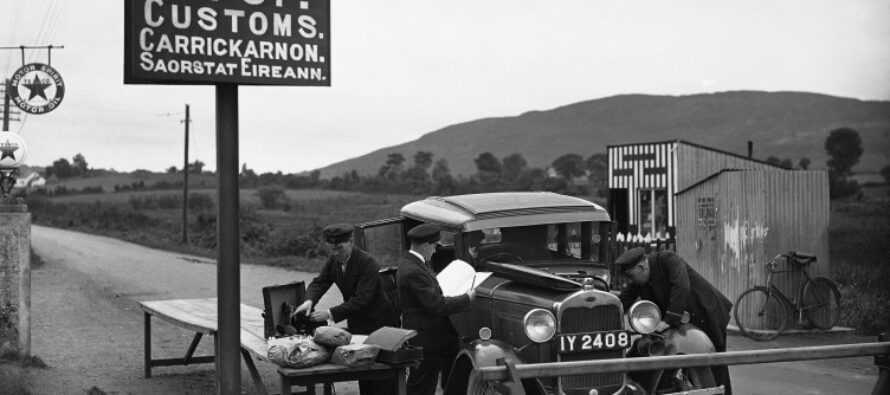

An Irish parliamentary report on achieving Irish unity has placed the republican goal of a united Ireland in the context of 26 County constitutional parliamentary politics for the first time.
The report, drawn up by the Dublin parliament’s committee on the Good Friday Agreement, is entitled “Brexit and the Future of Ireland: Uniting Ireland and its People in Peace and Prosperity”. It outlines a route map for building towards Irish reunification.
The report spans economic, political and security issues, and runs to over 1,200 pages with submissions from people who have been involved in conflict resolution across the world. An introduction and summary of recommendations are published below.
The committee’s rapporteur, Senator Mark Daly, who collated the document, said it was accepted by both nationalists and unionists that a referendum on Irish unity was inevitable. The report calls for the establishment of a New Ireland Forum to discuss the issue. It also foresees the Stormont Assembly remaining in a united Ireland. The Fianna Fail politician said he would welcome talks with unionists to address their concerns. He said he had consulted grassroots unionists, including former members of the British forces, when he was researching the report.
“Their concerns about Irish unity first and foremost weren’t economic. They were about protecting their British identity and concern that their land ownership rights may not be retained,” he said. “Ex-security force members also had fears about retribution against them in a united Ireland.” Mr Daly said that any road map to Irish unity must “address such concerns honestly”.
The parliamentary cross-party committee on the implementation of the Good Friday Agreement is made up of Senators, TDs, and MPs. It examined the significant challenge of Brexit, its impact across Ireland and the constitutional obligation on the Dublin government to promote Irish Unity.
The chairperson of the group, Sinn Fein TD Kathleen Funchion said: “The imposition on Brexit, against the will of the people, is a serious challenge to our economy, our agreements, and to the rights of citizens. It once again highlights the undemocratic nature of the union and the economic madness of continued partition”.
Funchion added that “Partition has failed citizens and the economy. The Good Friday Agreement provides for a peaceful and democratic pathway to unity”. And she insisted that ”The cross party findings and recommendations reflect the reality that it is now time for the Irish Government to act on the constitutional obligation. We must begin to plan to end partition and build a new and agreed Ireland that will be a place for all citizens to live and prosper.”
The report notably urges the Dublin government to negotiate for the Six Counties to be designated special status within the EU after Brexit and a commitment that there will be no return to passport controls along the border. Senator Daly pointed out that research indicated that Irish unity would lead to a 35.6 bn euro increase in GDP for the entire island within eight years, even in the absence of Brexit. “Almost 100 years ago, it was a fact that Northern Ireland was better off economically in the UK. Current United Nations data doesn’t support that,” he said. He urged the Dublin government to fight for the North of Ireland not to be put at a disadvantage by Brexit. “If ‘Richard’ in Birmingham is prevented from going to study in Paris, then that is a matter for the Brexiteers. But they shouldn’t be able to stop Richard in Belfast from having that opportunity,” he said.
While it was welcomed by Sinn Fein and the SDLP, the Ulster Unionists slammed the parliamentary document as “disingenuous” and a “united Ireland wish-list”.
Ulster Unionist representative Steve Aiken dismissed it as “poorly researched and highly biased ‘evidence’ gathering”. He said: “Politicians in the Republic would be better served looking after their own domestic affairs and dealing with their own considerable European challenges rather than seeking to undermine the constitutional position of Northern Ireland. “The Belfast Agreement is clear: Northern Ireland is part of the United Kingdom until its people say otherwise.”
Related Articles

IN FRANCIA VINCE L’ASTENSIONE
E’ il partito dell’astensione il vero vincitore del primo turno delle regionali in Francia. Il 53,6% degli aventi diritto infatti
Italy: Strengthen Legal Protection for LGBT People
A woman holds a banner in front of the Colosseum during the annual gay pride parade in Rome on June
LETTURE SULL’ INDIPENDENZA DEL KOSSOVO
La sentenza della Corte di giustizia della Aja che riconosce legittimità alla dichiarazione d’indipendenza unilaterale del Kosovo del 2008 che
